Can one portable power station run a motorhome's air conditioner, lights and WiFi, with no campsite hook-up and no generator?
We put an EcoFlow DELTA Pro 3 to the test with a client in Kuching, Sarawak, on a Japanese-built motorhome fitted with a roof air-conditioner, LED lighting and onboard electronics.
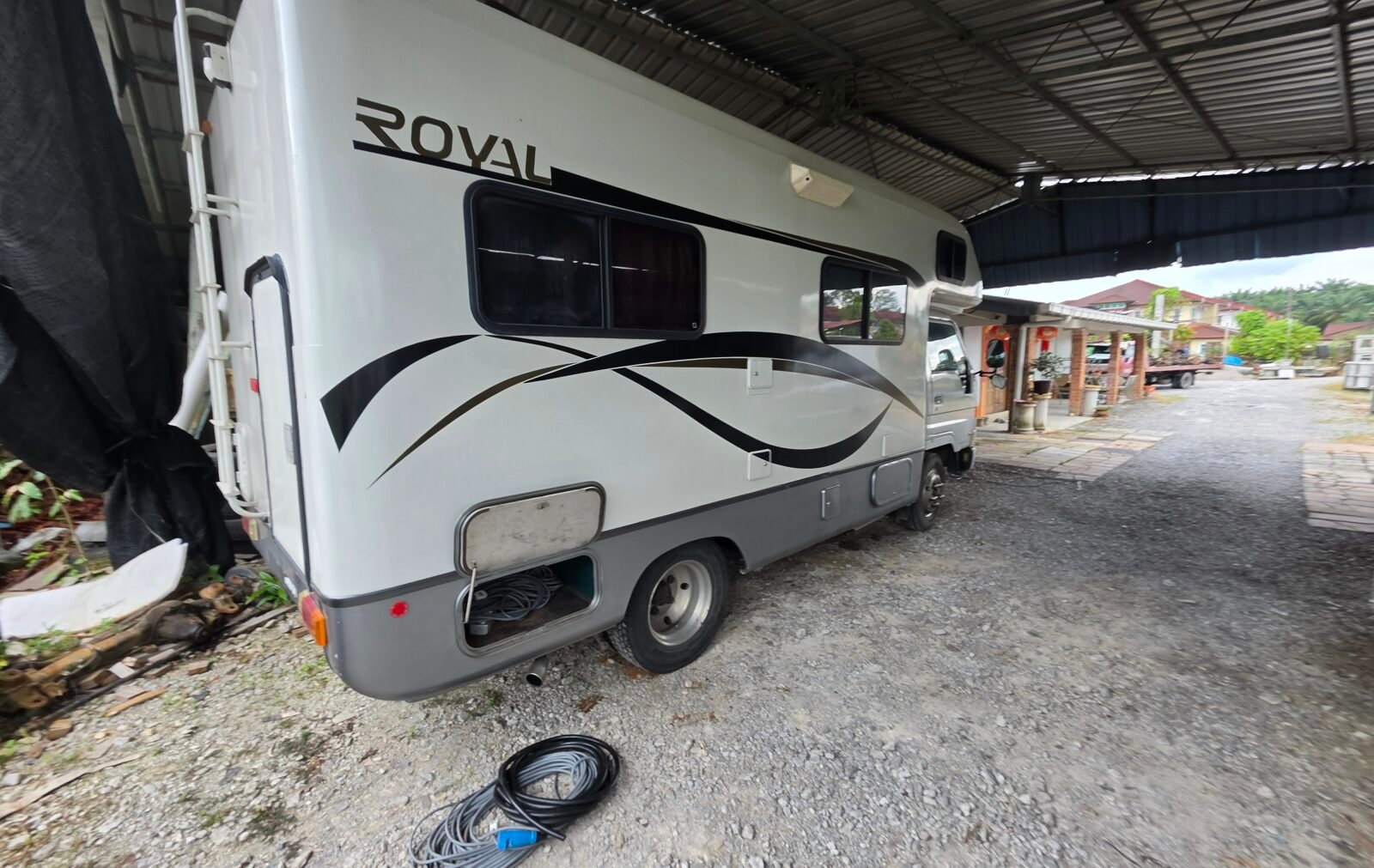
The client's motorhome, ready for the off-grid power test in Kuching, Sarawak.
Keep it in proportion. This is one real-world test on one vehicle. The figures below are what the power station display showed on the day. Your own results will depend on your air-conditioner, the weather and how many devices you run.
Below: what we tested, what the display showed, what it means for glampers and motorhome owners, and how to plan your own setup.
Why Motorhome Owners Need Better Power
Motorhome and glamping trips are about freedom. Power is often what limits it. Many campsites have limited or no hook-up, and the traditional answer is a petrol generator: loud, smelly, and not welcome at many quiet sites. In Malaysia's heat and humidity, a sleeping cabin without air-conditioning is hard to enjoy, so cooling is usually the biggest power demand.
What We Tested
With the client's motorhome parked under cover, we connected the power station to the vehicle's electrical system and ran the everyday loads a camping family would use:
- Roof air-conditioner: the biggest load, running to cool the cabin.
- LED lighting: the interior ceiling lights came on and stayed on.
- WiFi and electronics: connectivity for work, navigation and entertainment.
- Fans and small appliances: cabin fans and other 12 V and AC items.
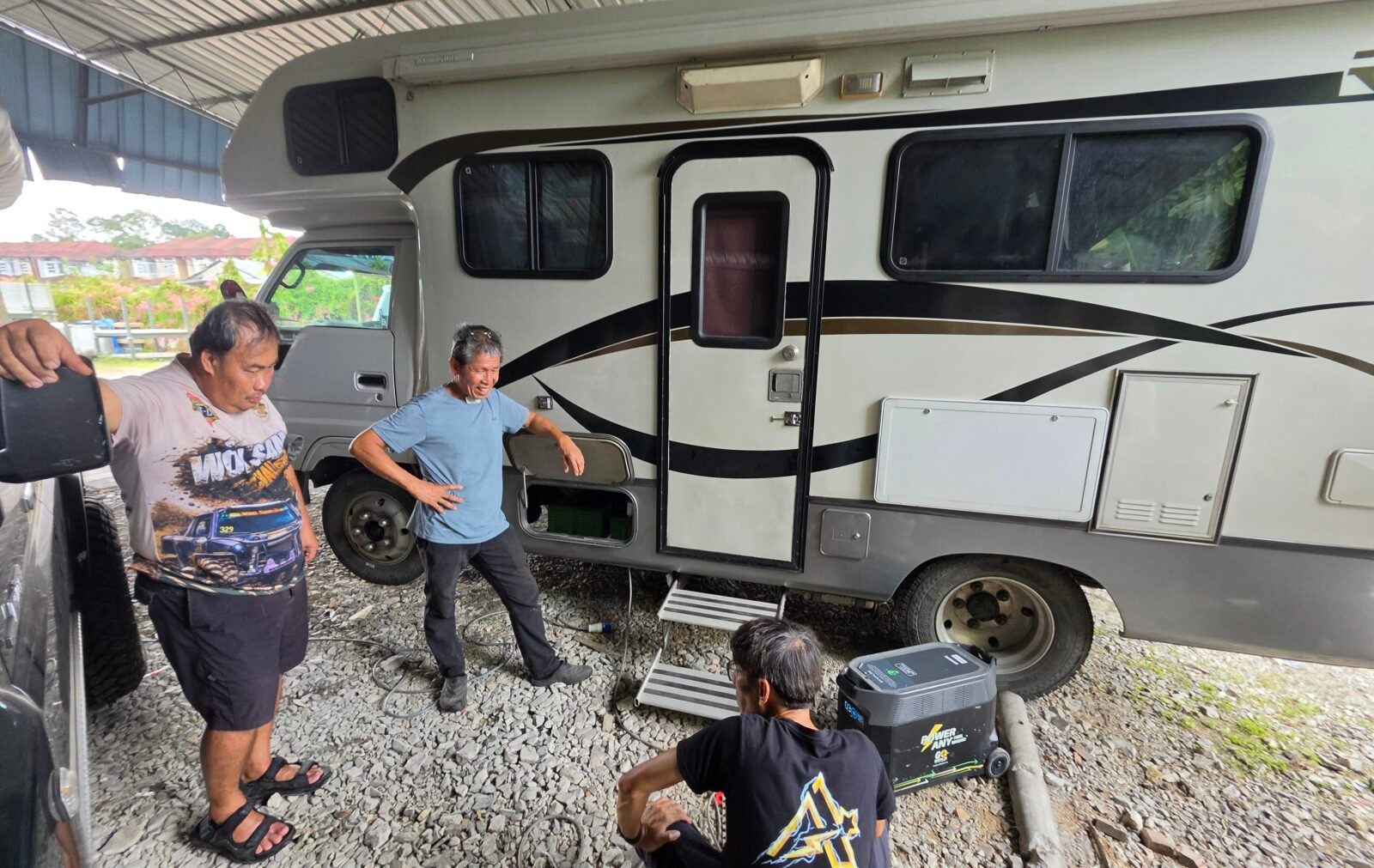
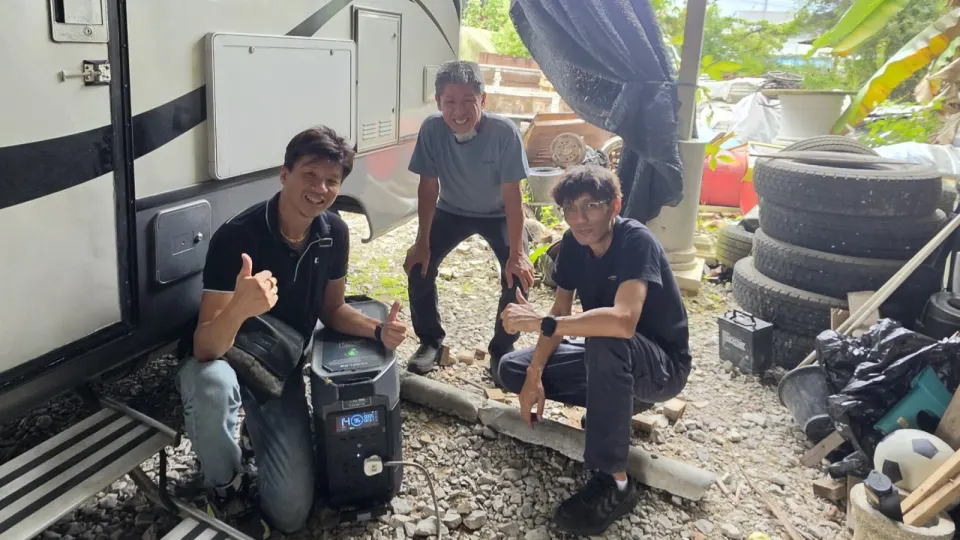
Setting up the power station beside the motorhome with the client.
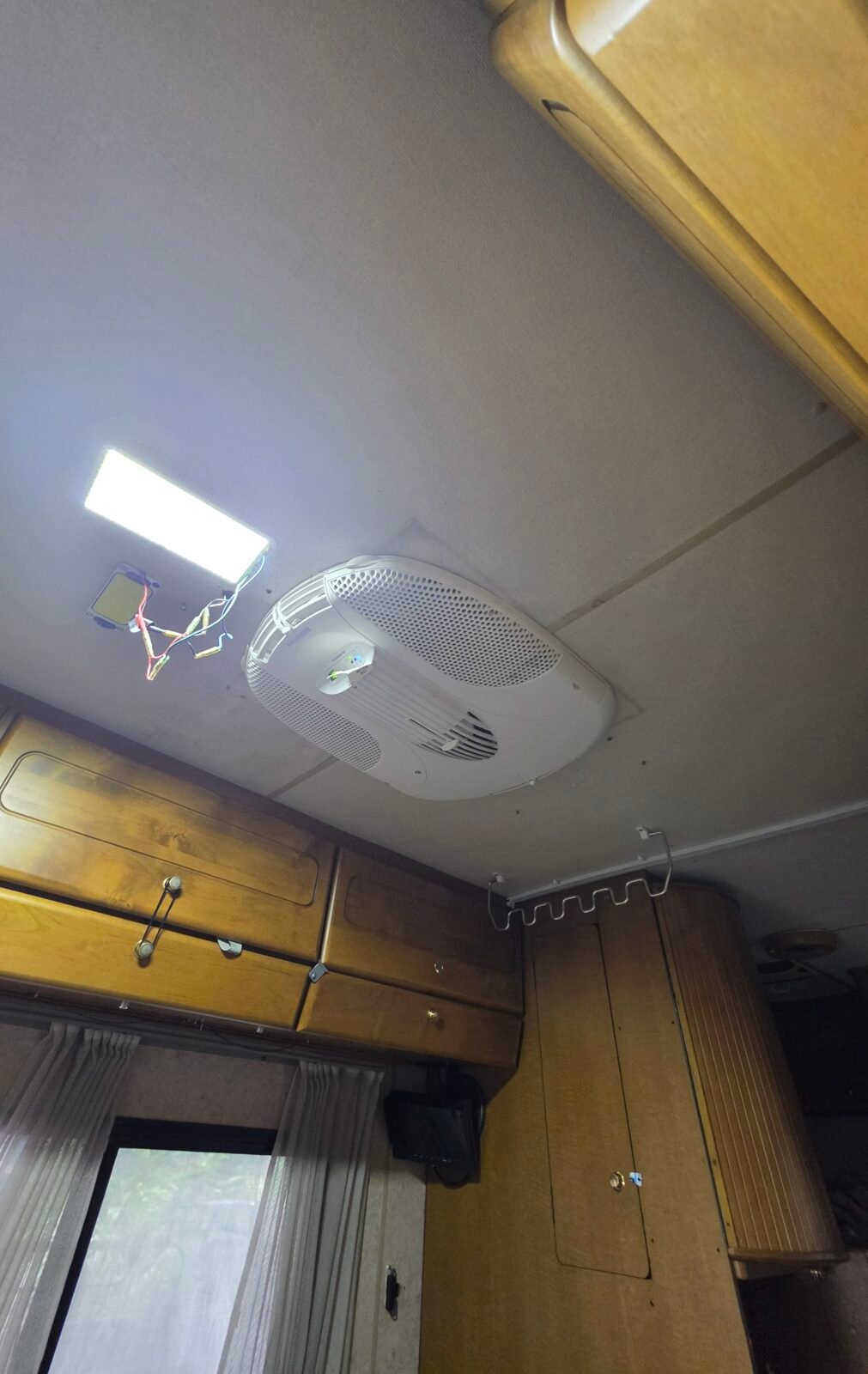
The roof air-conditioner and LED ceiling light, both running from the power station.
What the Display Showed
|
Load |
What we saw |
Notes |
|
Roof air-conditioner plus cabin loads |
Output of about 1,237 W |
Display showed roughly 3 hours remaining at that load |
|
Battery level |
96% |
Reading taken while the loads were running |
|
LED lighting and WiFi |
Small additional draw |
Easy for the power station to carry |
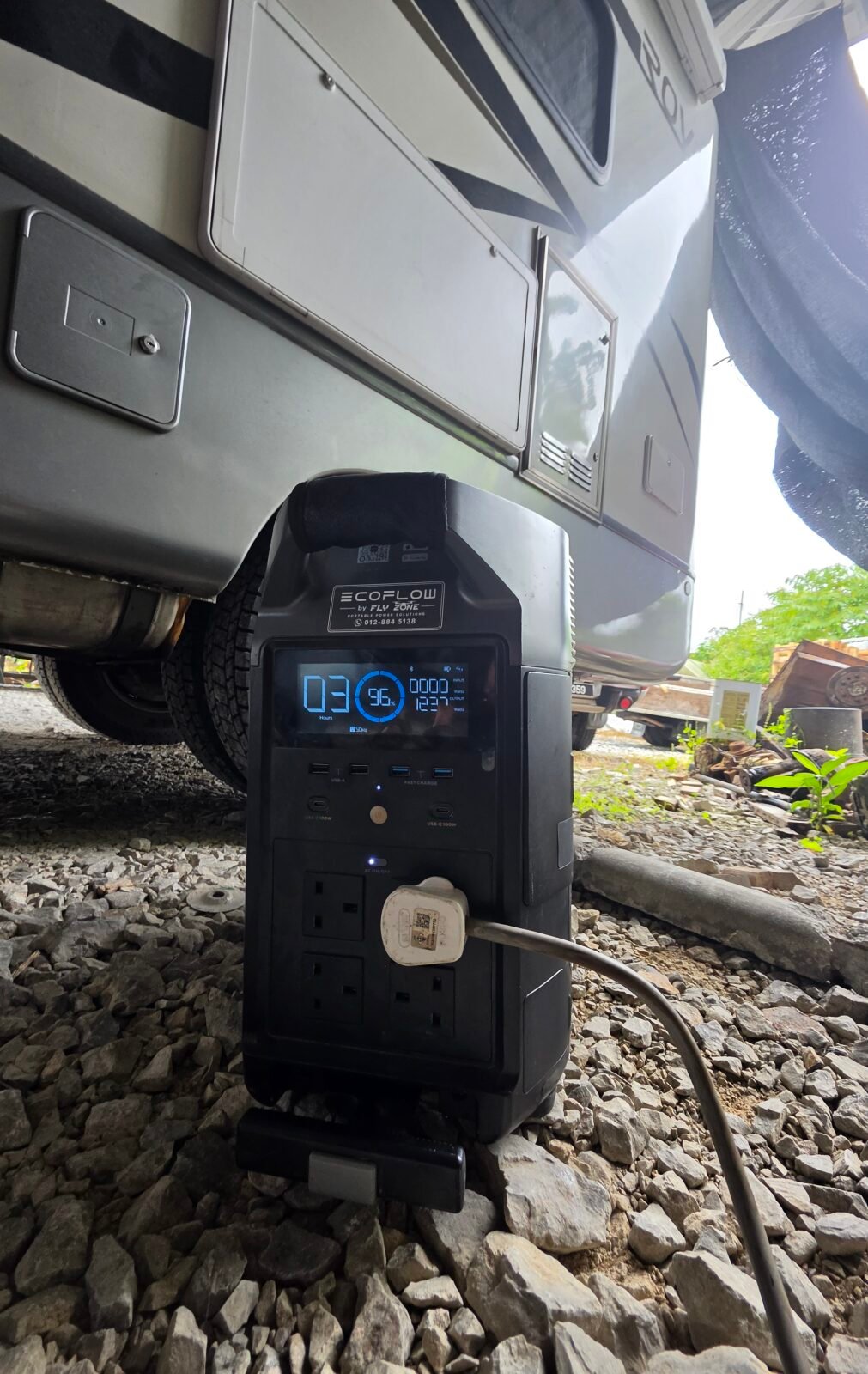
The EcoFlow display during the test: 96% battery, about 1,237 W output and roughly 3 hours remaining.
The air-conditioner is the heaviest load by far. Lighting, WiFi and fans add very little, so the air-conditioner decides how long your battery lasts.
What This Means for Glampers and Motorhome Owners
- Quiet nights: a battery power station is almost silent, so you can sleep with the air-conditioner on and your neighbours can sleep too.
- No exhaust fumes: nothing burning beside your sleeping area, and nothing to smell.
- No fuel to carry or store: no jerry cans, no spills and no trips to refill.
- Camp anywhere: you are no longer limited to sites with power posts. Beaches, farm stays and hilltop spots all become possible.
- Comfort and connection: air-conditioning, lights and WiFi mean glamping can feel like home, and remote work becomes possible from the road.
- Backup at home: between trips, the same unit can keep the fridge, fans and WiFi running during a power cut.
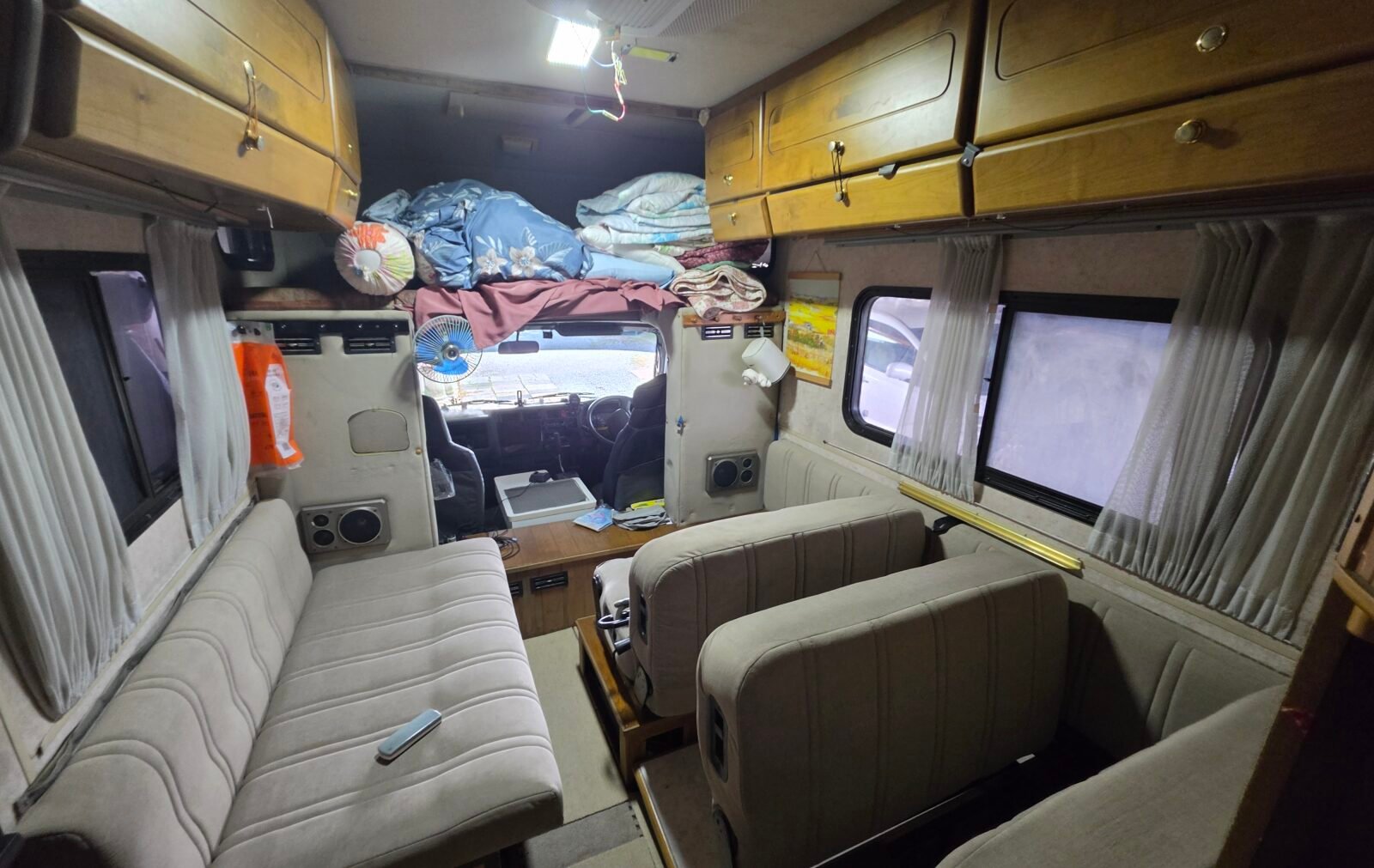
Inside the motorhome: lights on, fans running and the cabin ready to use, all powered off-grid.
What Portable Power Can and Cannot Do
|
What you need |
Portable power station |
Notes |
|
Run air-conditioning for a few hours |
Yes |
Plan around the air-conditioner's rated power |
|
Lights, WiFi, fans and device charging all night |
Yes |
Small loads, very long runtime |
|
Run the air-conditioner all night, every night |
Only with enough capacity |
Add extra batteries or recharge during the day |
|
Replace a campsite connection permanently |
No |
It is a flexible supply, not a power plant |
|
Recharge with no input |
No |
Plan a mains, vehicle or solar top-up |
How to Plan Your Motorhome Power Setup
- List your loads and their rated power, starting with the air-conditioner.
- Choose a power station with enough output for your air-conditioner's start-up and running power.
- Pick capacity for the hours you want to run, and add extra batteries if needed.
- Charge fully before you leave, and carry a way to top up on the road, such as solar panels or vehicle charging.
- Keep the power station dry, shaded and well ventilated, and never block its fans.
- Have a qualified electrician install any fixed connection to the motorhome.
The Bottom Line
This test shows that a portable power station can run the loads that matter most on a motorhome, quietly and cleanly. For glampers and motorhome owners, that means more places to go, better sleep and no generator noise.
Explore the EcoFlow range at ecoflow.com.my and choose the setup that fits your next trip.